Viewing Abstracts
During the International Congress, there are a variety of ways to explore and engage with the latest research in the field, including viewing hundreds of top-tier abstracts, representing the most cutting-edge advancements.
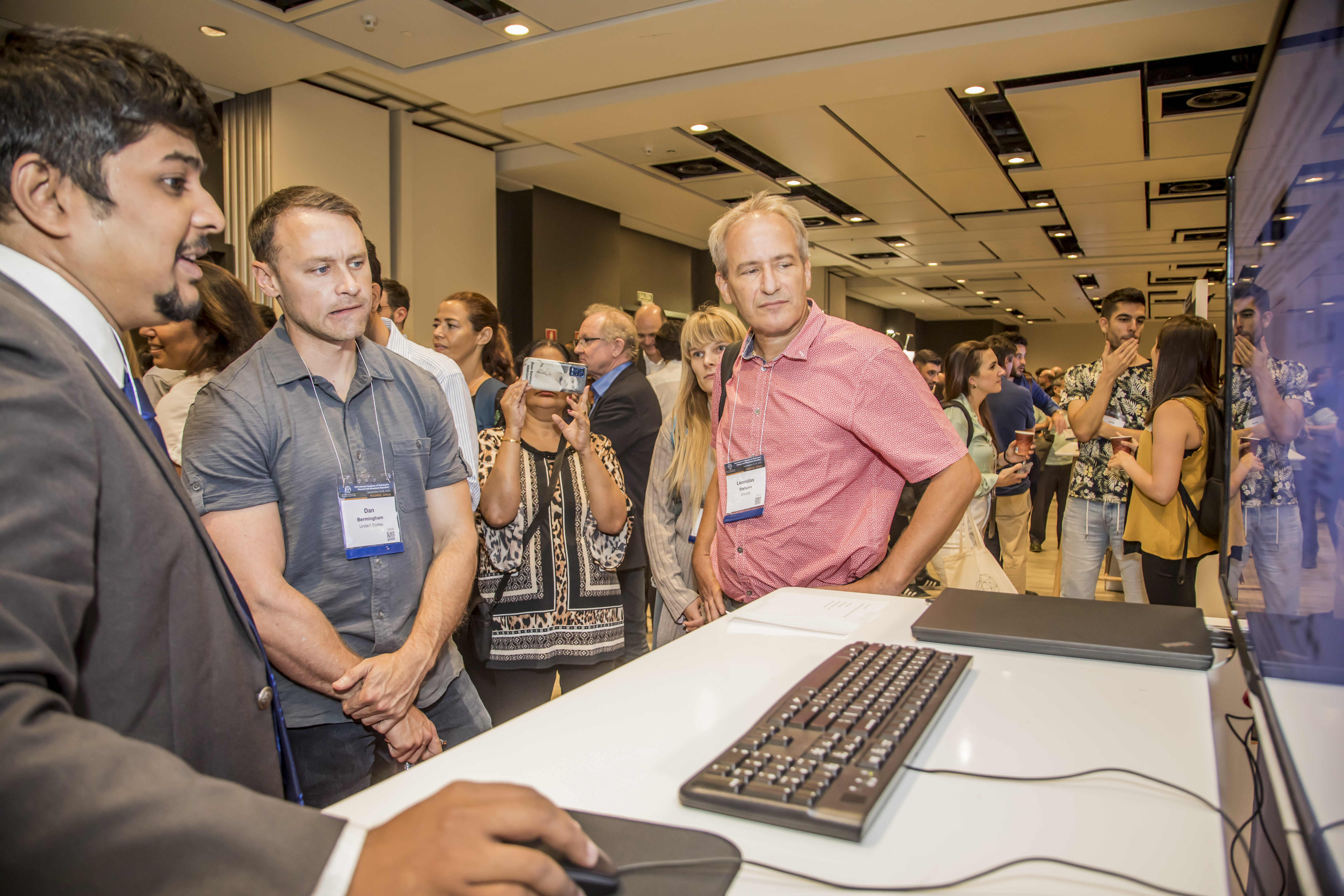
Browse the e-posters at your own pace, or meet and discuss interesting findings with the researchers.
*Video presentations, e-posters and published abstracts are not accredited for CME.

Accepted MDS abstracts are embargoed until 10 PM KST (local Seoul time) on Thursday, October 1, 2026.

Exploring E-Posters Onsite

E-Poster Hall Open Hours
Take your time browsing hundreds of original abstracts. Pull them up on demand at the viewing kiosks.
- Sunday, October 4 | 09:00 - 16:00
- Monday, October 5 | 09:00 - 16:00
- Tuesday, October 6 | 09:00 - 16:00
- Wednesday, October 7 | 09:00 - 16:00

E-Poster Sessions
Authors will present their work during scheduled e-poster session times, and be available in the hall to further discuss their findings.

Oral Platform Presentations
Hear short presentations about selected high-scoring abstracts on a given theme, with commentary by the authors and leading experts.
E-Poster Session Schedules
Each E-Poster Session will feature several short abstract presentations, including commentary and opportunity to ask questions about the research.
Sunday, October 4
- Poster Session 1: 9:30 - 10:30
- Poster Session 2: 12:00 - 13:00
- Poster Session 3: 13:00 - 14:00
Monday, October 5
- Poster Session 4: 9:30 - 10:30
- Poster Session 5: 12:00 - 13:00
- Poster Session 6: 13:00 - 14:00
Tuesday, October 6:
- Poster Session 7: 9:30 - 10:30
- Poster Session 8: 12:30 - 13:30
- Poster Session 9: 13:30 - 14:30
Wednesday, October 7:
- Poster Session 10: 9:30 - 10:30 5
- Poster Session 11: 12:00 - 13:00
- Poster Session 12: 13:00 - 14:00
Oral Platform Presentation (OPP) Schedules
Topics and Abstracts
OPP 1: Parkinsonism: Basic Science and Pathophysiology
Monday, October 5, 12:30 - 13:30
Room: Conference Room E5, 3rd Floor
- Cerebellar cholinergic denervation relates to impaired gait and cerebellocortical resting-state functional connectivity in Parkinson disease
- Senile Plaques and Neurofibrillary Tangles Modulate Lewy Body Distribution: Autopsy Study of 2,308 Cases
- Mechanisms of PLA2G6 Deficiency Impacting Mitochondria-associated membranes in Parkinson's Disease
- Iron-independent initiation of neurodegeneration in BPAN
- Cell-type-specific asynchronous aging acceleration across movement disorders
- Early Complement Activation Prunes Inhibitory Synapses in Prodromal Synucleinopathy Independent from Lewy Pathology.
- Investigating Phospho-α-Synuclein Pathology in Patient-Specific Microglia Integrated into Midbrain Organoids
- Proteomics Reveals Sex- and Age-of-onset-Stratified Immune Dysregulations in Parkinson's Disease
- Disassembly of α-Synuclein Aggregates by the All-D-peptide PRI-101: Preclinical Efficacy in Vitro and in Vivo.
OPP 2: Parkinson's Disease: Phenomenology, Clinical Assessment, Rating Scales, Epidemiology
Monday, October 5, 12:30 - 13:30
Room: Conference Room E3, 3rd Floor
- Prevalence and Socio-Demographic Profile of Parkinson’s Disease in Rural Tanzania
- Clinical and Biomarker Trajectories in GBA1 Non-Manifesting Carriers With and Without α-Synuclein Seed Amplification Positivity
- Psychiatric Profile of Screen Failures for Deep Brain Stimulation (DBS) Candidacy Evaluation: A Retrospective Cohort Study at a large tertiary referral center
- The Prevalence of Parkinson’s Disease in Kilifi County, Kenya: A ‘Transforming Parkinson’s Care in Africa’ (TraPCAf) study
- Prevalence of Parkinson's Disease in the South Tongu District of Ghana and Projections of Current and Future Disease Burden (2026 - 2040)
- Genetic risk factors reduce the risk of diabetes mellitus in Parkinsons disease
- Occupational Solvent Exposure and Parkinson’s Disease: An Observational Study in PPMI Online
- Sex-Specific Differences in Parkinson's Disease: A Retrospective Analysis of over 10,000 Patients from the Paracelsus-Elena Hospital, a Specialized Movement Disorder Clinic in Germany
- Survival and Related Factors in Patients with Parkinson's Disease : A Multicenter Prospective Cohort Study in China
- Levodopa Responsiveness and Motor Complication Trajectories in Parkinson's Disease by α-Synuclein Seed Amplification Assay Status
OPP 3: Atypical and Other Parkinsonisms
Monday, October 5, 12:30 - 13:30
Room: Conference Room E1, 3rd Floor
- Exploring the Genetic Landscape of Corticobasal Syndrome in Asian Populations
- Global Functional Trajectory and Predictors of Improvement in Idiopathic Normal Pressure Hydrocephalus Following Shunt Surgery
- Early Overlap of Corticobasal Syndrome and Richardson Syndrome in Corticobasal Degeneration: Evidence from 252 Autopsy-Confirmed Cases
- Predictors of disease progression in progressive supranuclear palsy and corticobasal syndrome
- The Syn-D Study: Detection of Longitudinal Changes in Cutaneous Phosphorylated Alpha-Synuclein in Mild Cognitive Impairment
- Identification of Alpha-synuclein Pathology in Primary Tauopathies by Seed Amplification Assay
- A CSF C Terminal α Synuclein Assay to Differentiate Multiple System Atrophy From Parkinson’s Disease
- Multicenter Evaluation of Automated Structural MRI-based Diagnosis for Multiple System Atrophy
- REM Sleep Behavior Disorder and Clinical Progression in Multiple System Atrophy
OPP 4: Parkinson's Disease: Neuroimaging
Monday, October 5, 12:30 - 13:30
Conference Room E6, 3rd Floor
- A Dopamine Clock for Biological Staging of Parkinson’s Disease
- Structural-Functional Decoupling and Imaging Transcriptomics in Cognitive Impairment of Parkinson’s Disease
- Reduced Cardiac MIBG Uptake as a Biomarker for Nucleus Basalis of Meynert Degeneration and Cognitive Impairment in Parkinson’s Disease
- The predictive value of the 18F-FDG PET-derived Parkinson’s disease Related Pattern for neurodegenerative disease progression in isolated REM Sleep Behavior Disorder
- Progressive Dynamic Functional Network Disorganisation and its Association with Phenoconversion in Isolated REM Sleep Behaviour Disorder: A Multicentre Study
- Coupling between global BOLD signal and cerebrospinal fluid flow in isolated REM sleep behavior disorder and its relation with non-motor symptoms.
- Distinct Glymphatic Pathways Underlie Prodromal and Clinical Features of Parkinson’s Disease
- DTI-ALPS index and its association with dopamine loss, brain metabolism, and motor and cognitive manifestations in Parkinson’s disease
- Diagnosing Prodromal Synucleinopathies – What is the Role of Cardiac MIBG Scintigraphy?
OPP 5: Hyperkinetic Movement Disorders and Allied Healthcare / Quality of Life / Palliative Care / Patient Perspectives
Tuesday, October 6, 13:00 - 14:00
Room: Conference Room E5, 3rd Floor
- Modeling disease progression in spinocerebellar ataxias
- Developing a Unified Advanced Neuromodulation Clinical Pathway for MR-Guided Focused Ultrasound and Deep Brain Stimulation
- Staged Bilateral MR-Guided Focused Ultrasound in Essential Tremor: Safety, Efficacy, and Rising Adoption of Second-Side Treatment
- Multi-tracer positron emission tomography reveals early disruption of cerebrospinal fluid clearance in Huntington’s disease
- Long-term 5-year follow-up of unilateral FUS thalamotomy for essential tremor
Bilateral MRgFUS thalamotomy in essential tremor: a prospective case series using probabilistic tractography - Oculomotor Abnormalities in the Spinocerebellar Ataxias: A Large Cohort Analysis
- Genetic Rare Variation in Early-Onset Neurodegenerative Movement Disorders: A Clinicopathologic Study.
- Biomarker and Clinical Correlates of Restless Legs Syndrome (RLS) in Parkinson’s Disease: A Paradoxical Hyperdopaminergic State
OPP 6: AI / Technology / Telemedicine and Education / History / Disparities / Other Topics
Tuesday, October 6, 13:00 - 14:00
Room: Conference Room E1, 3rd Floor
- Brain Atlas-Based Machine Learning for Parkinsonian Disorders Classification and Evaluation of Classification Performance Across Disease Duration
- AI guided presurgical risk stratification for deep brain stimulation surgery
- Beyond Movement Amplitude: Interaction‑ and Asymmetry‑Aware Facial Blendshape Analysis in Parkinsonian Hypomimia
- Handwriting Based Screening of Parkinson’s Disease Using Image Analysis of Drawing Tasks
- Automated CRST Spiral Drawing Scoring Using a Multimodal Vision-language model: Development and Validation in a Large Essential Tremor Cohort
- Assessing the Effects of Anti-Parkinsonian Medication Using Wearable Sensor-Derived Kinematic Data and Machine Learning
- MDS Guidance Framework for Electronic Clinical Outcome Assessments: Updating Practices for Validation and Implementation
- Smartwach Actigraphy for Detection of REM Sleep Behavior Disorder: The dBM-DEV Study
OPP 7: Parkinson's Disease: Clinical Trials, Pharmacology, and Medical Management
Tuesday, October 6, 13:00 - 14:00
Room: Conference Room E6, 3rd Floor
- Allogeneic iPSC-Derived Dopaminergic Progenitor Transplantation for Parkinson’s Disease: A Phase 1, Dose-Escalation Trial
- Robot-Assisted Transplantation of Hypoimmune iPSC Derived Dopaminergic Progenitor Cells for Idiopathic Parkinson’s Disease
- External Validation of Reported Clinical Predictors of Levodopa-Related Adverse Drug Reactions in Parkinson’s Disease
- Combination Device-aided therapy in Parkinson’s Disease
- Peripheral neuropathy (NP) in advanced Parkinson’s disease (PD) patients treated with continuous subcutaneous foslevodopa/foscarbidopa (fLD/fCD)
- Risk of Serotonin Syndrome in the Combined Use of Selective Monoamine Oxidase B Inhibitors and Serotonin-acting Antidepressants
- Effects of a Motor–Cognitive eHealth‑Supported Home Exercise Program on Walking Difficulties and Performance in Parkinson’s Disease
- Azathioprine-associated changes in peripheral–central immune signalling in Parkinson’s disease: post-hoc analysis of AZA-PD
- STEM-PD: An open-label phase I/II trial of transplanted human pluripotent stem cell-derived dopaminergic progenitor cells in Parkinson’s disease
OPP 8: Parkinson's Disease: Genetics
Tuesday, October 6, 13:00 - 14:00
Room: Conference Room E3, 3rd Floor
- Multi-Ancestry Analysis of Repeat Expansions in Parkinson’s Disease
- Interplay of sex and GBA1 and LRRK2 genotype in Parkinson disease progression
- Admixture Mapping of the VA Million Veteran Program Cohort Implicates Novel Genetic Risk Loci for PD Driven by African and Native American Ancestry
- LRRK2 in Focus: A Global Browser Linking Genetic Diversity to Functional Effects
- Genetic Modifiers of Age at Onset for Parkinson’s Disease in European Populations
- MDSGene literature update on autosomal recessive Parkinson's Disease
- Elucidating the demographic distributions and implications of GBA1 gene variants in Parkinson’s Disease.
- Investigating the Role of Biallelic EPG5 Variants in Parkinson's Disease
- Effect of ApoE ε4 allele on brain metabolism and cognition in non-demented Parkinson’s disease
OPP 9: Parkinson's Disease: Surgical Therapy, Cognition, Lewy Body Dementia
Wednesday, October 7, 12:30 - 13:30
Room: Conference Room E1, 3rd Floor
- Emergence of Cortical Amyloid from the Prodromal Stage of the Lewy Body Disease Spectrum: Evidence from a PiB-PET Study
- Latent Classes of Cognitive Decline in Parkinson’s Disease: Neuroimaging and Neurodegenerative Blood Biomarker Correlates
- Body Weight Increases After DBS in Parkinson’s Disease but Not Essential Tremor
- Modulation and subcortical signatures of sleep in Parkinson’s Disease under chronic STN-DBS: insights from Synchronized Deep Brain Sensing and nocturnal videopolysomnography
- Quantitative Changes in Speech After Focused Ultrasound Subthalamotomy and Thalamotomy in Parkinson’s Disease
- Timing of Deep Brain Stimulation and Cognitive Trajectories in GBA1-associated Parkinson’s Disease
- Three-Year Results from the Largest Prospective Cohort of Directional Subthalamic Deep Brain Stimulation in Parkinson’s Disease to Date
- Neuropsychiatric Symptom Evolution Over the First Decade of Biomarker-Defined Parkinson’s Disease
- Five‑Year Outcomes Following Unilateral MR‑Guided Focused Ultrasound Pallidotomy in Parkinson’s Disease
- A Comprehensive Analysis of Advanced Deep Brain Stimulation Programming Strategies
OPP 10: Dystonia, Functional / Drug-Induced / Autoimmune Movement Disorders, and Pediatric / Rare Neurometabolic / Paroxysmal Movement Disorders
Wednesday, October 7, 12:30 - 13:30
Room: Conference Room E5, 3rd Floor
- Intravenous AAVrh.10hFXN (LX2006) Gene Therapy in Friedreich Ataxia: Early Neurologic Assessment from Two Phase 1 and 2 Studies
- Precision Gene Therapy Results in Clinical Benefit and Developmental Gains in Aromatic L-Amino Acid Decarboxylase Deficiency (AADCd): The UK Experience
- Identification of a sporadic dystonia-related brain network using resting-state fMRI and machine learning
- Temporal Prediction and Multisensory Integration in Musician’s Dystonia
- Altered Motor Regulation and Limbic-Motor Circuits in Paroxysmal Kinesigenic Dyskinesia
- Multilevel Structure-Function Coupling Reveals Network Signatures of Remission in Paroxysmal Kinesigenic Dyskinesia
- Automated dystonic posture detection of the hand in children with GNAO1-related movement disorders from home-based videos using computer vision
- Detecting Repeat Expansions: Added Diagnostic Yield in Movement Disorders by Optical Genome Mapping
- Cholinergic dysfunction associated to aberrant functional connectivity in Parkinson Disease-related dystonia
OPP 11: Parkinson's Disease: Biomarkers, Etiology, and Other
Wednesday, October 7, 12:30 - 13:30
Room: Conference Room E6, 3rd Floor
- Non-Rapid Eye Movement Sleep Neurophysiological Alterations in Lewy Body Disorders
- Biological Predictors of Clinical Domains in Isolated REM Sleep Behavior Disorder with and without Synucleinopathy and Dopamine Dysfunction
- Parkinson’s Disease Early Diagnostic and Prognostic Biomarkers Identified by Large-scale Plasma and Cerebrospinal Fluid Proteomic Profiling
- Personalized Rhythmic Cueing Differentially Improves Straight Walking and Turning in Parkinson’s Disease
- Predicting Dementia in Parkinson’s Disease Using Blood-Based Proteomics
- The Syn-Sleep Study: Detection of Cutaneous Phosphorylated Alpha-Synuclein in REM Sleep Behavior Disorder
- Detection of α-synuclein seeds in skin samples from PPMI participants
- Beyond α-Synuclein SAA: A Multimodal Minimally Invasive Platform for Biologically Informed Diagnosis of Parkinsonian Syndromes
- Disparate Subregional Striatal DAT-SPECT Associations with CSF-Synucleinopathy Status and Clinical Severity Across Parkinson’s Disease Continuum
OPP 12: Late-Breaking Abstracts: Parkinson's Disease
Wednesday, October 7, 12:30 - 13:30
Abstracts for this session will be announced soon.
Publication and Online Viewing
All accepted abstracts will be published in an online supplement to Movement Disorders, the official journal of the International Parkinson and Movement Disorders Society, and in the searchable MDS abstract website, mdsabstracts.org.
To cite a published abstract, please refer to mdsabstracts.org.
Abstract Archives
The International Congress has a decades-long legacy supporting cutting-edge research. Browse the archives of published International Congress abstracts:
View earlier abstracts (2002-2015)